Undocumented trips
Movements captured in paper, WhatsApp, or Excel are easy to delay, misattribute, or miss during reconciliation.
Tanka decides whether a truck can be assigned, records what happens while it runs, and ties depot volumes to station volumes when it lands. One record, from the gantry to the ledger.

“We finally have clear visibility on trips, vehicles, drivers, and compliance in one system. It’s cut down manual work and paperwork and improved accountability across the team.”
Three stages. Each one decides something the next depends on, which is why a gap in the first shows up as a loss in the third.
A truck is assigned only when the record says it can be.
What happens on the road is written down as it happens.
The delivery reconciles compartment by compartment.
Volumes are measured compartment by compartment and corrected to 20°C at both ends. The delivery reconciles only when every compartment does, so a bad compartment cannot hide inside a good total.
| Comp. | Product | Depot @20°C | Station @20°C | Loss (L) | Status |
|---|---|---|---|---|---|
| C1 | 301202AGO | 9,000 | 8,996 | 4 | Ties out |
| C2 | 331203PMS | 9,000 | 9,001 | −1 | Ties out |
| C3 | 301223IK | 6,000 | 5,998 | 2 | Ties out |
| C4 | 301202AGO | 9,000 | 8,907 | 93 | Delivery open |
Delivery DN-4471 · illustrative figuresHazard identification over UN substance number, as plated on the tanker: 1202 gas oil, 1203 motor spirit, 1223 kerosene.
Loaded trips, client activity, fuel signals, exceptions, compliance status and management reports — without waiting for manual consolidation.
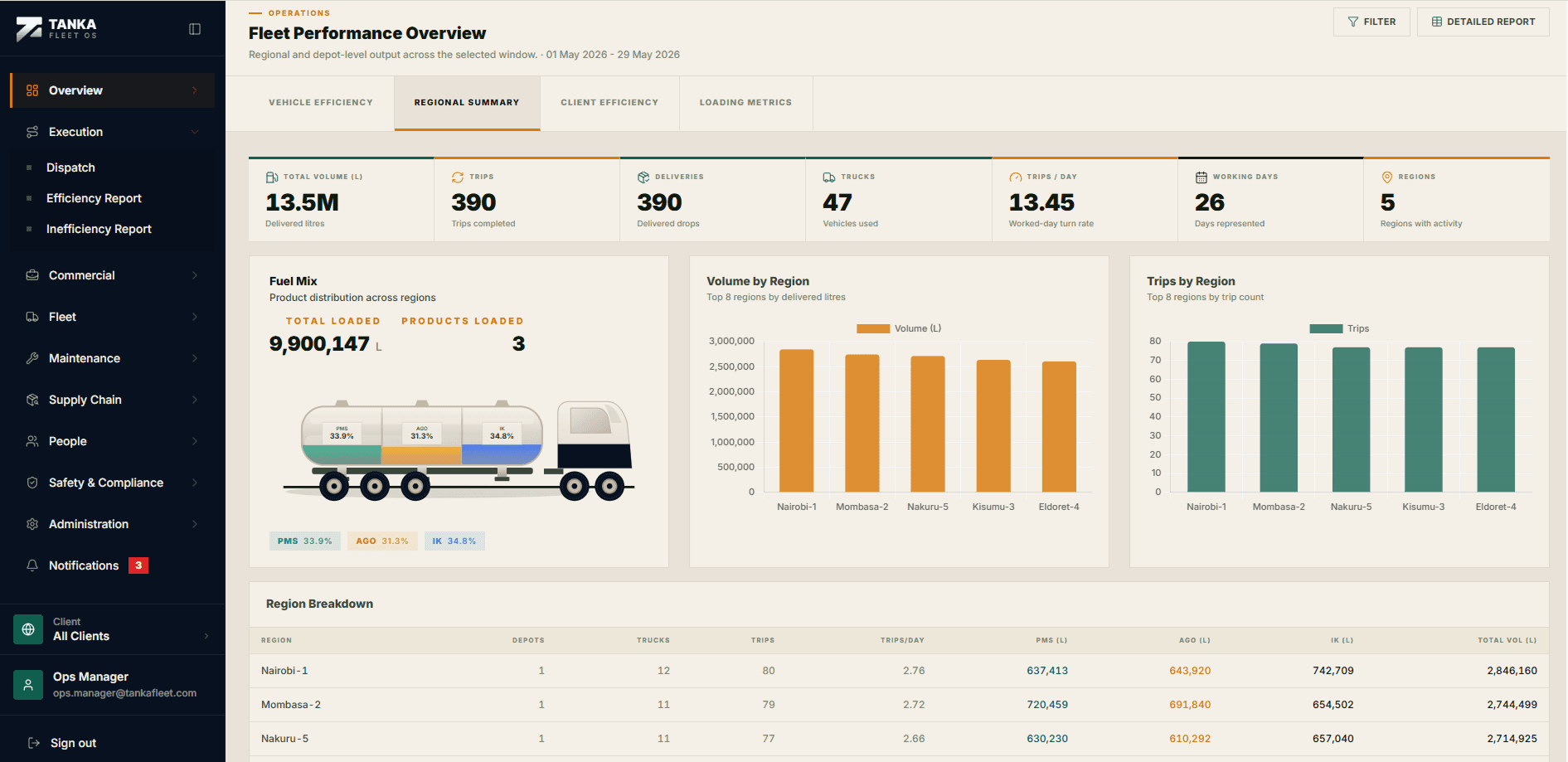
Fuel logistics margins leak through small operational gaps: undocumented trips, delayed POD, unexplained fuel variance, expired compliance records, disconnected maintenance data, and manual reconciliation.
Movements captured in paper, WhatsApp, or Excel are easy to delay, misattribute, or miss during reconciliation.
Missing POD, delivery notes, approvals, and exceptions slow finance down and weaken customer dispute resolution.
Fuel usage, route distance, driver behavior, and vehicle context stay disconnected until leakage becomes normal.
The fleet leakage audit reviews eight to twelve weeks of your trip, fuel and reconciliation records against your actual workflow, stage by stage, and puts a number on each gap.
How information moves today, from loading advice through assignment and delivery to the invoice.
Every gap found across fuel variance, missing POD, open trips, compliance and manual reconciliation — with its evidence, frequency and owner.
Built from fleet size, fuel spend, admin effort and delayed billing risk, with every input labelled known, inferred, assumed or missing.
What to digitise first, what to baseline, and the implementation scope — confirmed after discovery. Enough to decide with, or to walk away from.
The audit is scoped with you before any work begins, and it stands on its own whether or not you go on to license Tanka.
Bring eight weeks of records. We will tell you what is recoverable, what is not, and what it would take.
Book a fleet leakage audit